Beijing warns Washington off new chip curbs days before Trump lands in Shenzhen. Its warships made the point first
Future Times4 min read
In 30 seconds
China wants the Nvidia scandal kept out of next week's summit and has spent a fortnight massing ships around Taiwan. Traders see the naval show as pressure, not a prelude to war, and expect the real fight to be over chips.
- Congress wants chip limits in the defence bill, and Beijing has signalled it will retaliate if they pass
- China's naval push began on 2 November, before the Huang scandal broke, and may already be winding down
- Traders give new US sanctions on China by 30 November about a one-in-ten chance
What it means
- MarketsTraders have barely moved the Taiwan odds through a fortnight of naval pressure, so a calm summit is already in the…
- Stocks and sectorsChipmaking-equipment suppliers are most exposed if the MATCH Act passes, because it targets tools already in China.
- BusinessCompanies that rely on Chinese rare earths and magnets should treat mid-January as the next cliff.
- GeopoliticsBeijing wants the trade track, now formalised in the Board of Trade, kept apart from chip controls.
What to watch
- 18-19 NovMr Trump meets Mr Xi in Shenzhen on 18-19 November
- 28 NovCome Taiwan's local elections on 28 November, Mr Lutnick's testimony on 10 December and the truce…
- 10 DecCome Taiwan's local elections on 28 November, Mr Lutnick's testimony on 10 December and the truce…
The odds
Polymarket · live, 05:07 GMTChina and Taiwan clash militarily before 2027
unchanged over 7d
What would move these odds
- A Chinese live-fire drill or blockade announcement after the summit would push the odds up
- A collision or exchange of fire involving Chinese and Taiwanese ships would move them sharply
- A calm Shenzhen meeting on 18-19 November would ease them back towards 2%
Now · 3%
Think the market's wrong? Add your forecast and see who's closer.
- Will China invade Taiwan by end of 20262%unchanged
- Will China blockade Taiwan in 20262%unchanged
- Will China invade Taiwan by December 31, 20279%up 1 point
China "has consistently opposed the abuse of export control measures", Mao Ning, a foreign ministry spokeswoman, said in Beijing on Friday 13 November. The target was a Congress that wants tighter chip curbs after the scandal that cost Jensen Huang his job at Nvidia. The two countries, she added, "should work together to implement the important consensus" their leaders have reached.
The timing matters. Donald Trump flies to Asia next week, first to the Asean summit in Manila and then to the Asia-Pacific Economic Cooperation summit in Shenzhen on 18-19 November, where he is due to meet Xi Jinping for the third time this year. On the same Friday, officials held the first meeting of the US-China Board of Trade, agreed at the leaders' Beijing summit in May.
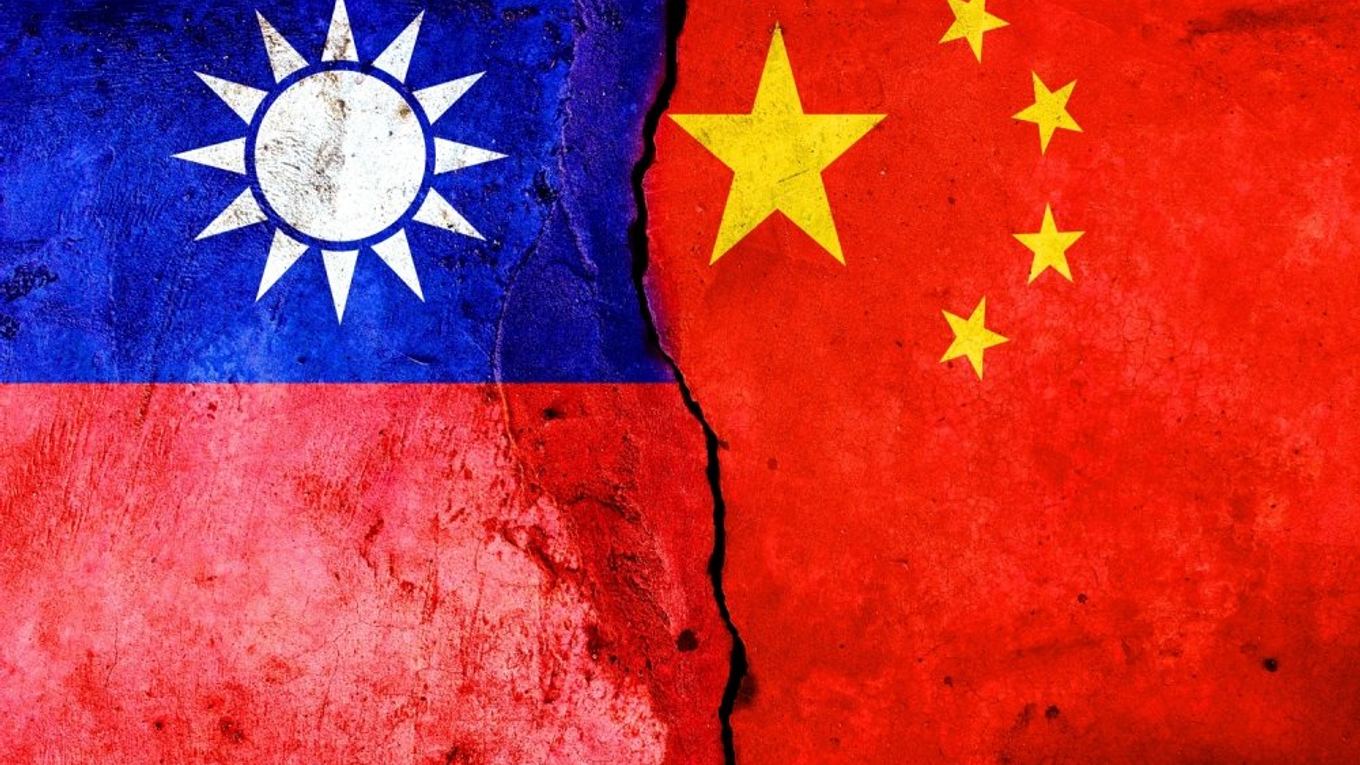
Beijing arrives pressing on two fronts: a diplomatic push to stop the Huang affair becoming new US export rules, and a fortnight of unannounced naval activity around Taiwan. Traders read the second as pressure rather than a prelude to war, and fully expect the summit to happen. The contest that remains open is over chips.
The scandal Beijing wants kept off the table
Mr Huang resigned on Thursday amid a scandal over an affair he has admitted, reportedly with Alice Huang, a former senior executive at Megaspeed, a Singapore data-centre company. US officials have alleged she spied for China. Beijing rejects the allegation, calling it a "pretext for imposing a technological blockade".
In Washington the affair has become a fight about enforcement. Scott Bessent, the Treasury secretary, said Treasury, Defense, State and the US trade representative had all backed blacklisting Megaspeed. "Commerce BIS has the pen, and you will have to ask them about their internal processes," he said. Howard Lutnick, the commerce secretary, has agreed to testify to the Senate Banking Committee on 10 December, according to a US official.
Congress wants to go further. "I'm in favour of limiting those exports," said Mike Johnson, the House speaker. Lawmakers want the AI Overwatch Act, the Chip Security Act and the MATCH Act, which would press Japan and the Netherlands to restrict chipmaking tools already in China, added to this year's defence bill. "Chinese officials have been clear that they will respond to the passage of this legislation," said Paul Triolo of DGA-Albright Stonebridge Group. He pointed to tighter controls on rare earths and magnets, and the two countries' trade truce runs only to mid-January.
A naval show that started before the scandal
The military pressure predates the scandal. From 2 November China deployed large naval forces around Taiwan without announcing an exercise. On 3 November Joseph Wu, secretary general of Taiwan's National Security Council, said about 100 Chinese navy and coast guard ships were in the western Pacific, and the defence ministry reported 49 Chinese military aircraft near the island. On 10 November Wellington Koo, the defence minister, said: "China has indeed conducted area denial drills in the Western Pacific with the Liaoning carrier group" and "other naval training formations". Beijing calls the carrier's training routine and "not directed at any particular country".
By 8-9 November the ministry counted just one Chinese aircraft and eight ships nearby. "We are not going to wake up tomorrow to an operation where Taiwan is being taken by force," Emmanuel Véron, an expert on the Chinese military, told France 24.
Traders agree. As of 13 November they put the chance of a military clash between China and Taiwan before 2027 at 3.4%, up 1.2 points in a day but still about one in 30. They give a Chinese blockade this year 1.9% and an invasion by the end of 2026 1.5%. Even an invasion by the end of 2027 gets only 8%.
A handshake, not a rupture
Traders give Mr Trump a 99.1% chance of meeting Mr Xi by 30 November, and put the chance of Mr Trump, Vladimir Putin and Mr Xi being seen together before 2027 at 94.5%, up six points in seven days. Mr Trump expects to see both men in Shenzhen; Beijing appears warier.
Policy is another matter. Traders give a new US sanctions move against China by 30 November, which would include fresh export controls, only 9.5%; blacklisting single companies under existing rules would not count. Yet they put the chance that Mr Lutnick leaves Commerce by the end of the year at 55.5%, up from 21.5% seven days ago. Washington's personnel looks likelier to change than its policy.
Why the calm could be wrong
The strongest case against the market is that the chip fight runs through Congress, which is not at the summit. If the bills go into the defence bill, China has said it will respond, and a rare earths squeeze would land as the truce expires. The American Enterprise Institute and the Institute for the Study of War said on 6 November that China might be preparing a larger unannounced exercise simulating Taiwan's isolation.
What it means for markets, business and geopolitics
Markets Traders have barely moved the Taiwan odds through a fortnight of naval pressure, so a calm summit is already in the price. The bigger surprise would be escalation, not a good meeting.
Stocks and sectors Chipmaking-equipment suppliers are most exposed if the MATCH Act passes, because it targets tools already in China. Nvidia faces scrutiny of its China sales without a permanent chief; traders give Apple an 86.6% chance of being the world's largest company at the end of December, up 23 points in seven days.
NVDAAMATLRCXASMLBusiness Companies that rely on Chinese rare earths and magnets should treat mid-January as the next cliff. If Congress tightens chip rules, Beijing's likeliest reply is in minerals, not at sea.
Geopolitics Beijing wants the trade track, now formalised in the Board of Trade, kept apart from chip controls. That works only if the White House can hold Congress back.
What to watch
Mr Trump meets Mr Xi in Shenzhen on 18-19 November. Then come Taiwan's local elections on 28 November, Mr Lutnick's testimony on 10 December and the truce deadline in mid-January. Live-fire drills announced after Mr Trump leaves would force traders to rethink Taiwan.
Beijing has shown its ships. In Shenzhen, it wants to talk about chips.