Warsh Inherits a Fed That Won't Follow Him
The new Federal Reserve chair faces the most divided Board in three decades, and prediction markets have priced the result: total paralysis.
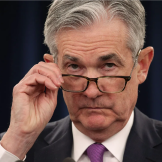
The new Federal Reserve chair faces the most divided Board in three decades, and prediction markets have priced the result: total paralysis.
Kevin Warsh officially takes the helm of the Federal Reserve this month with a mandate from the White House to cut interest rates. The Board he inherits has other ideas. Two governors formally dissented against naming Jerome Powell as temporary chair, an unusually public fracture before Warsh has even chaired his first meeting. CNBC called it a "big family fight" over the direction of monetary policy. That phrase undersells it. This is an institutional crisis with no modern precedent.
The April 29 FOMC meeting recorded the highest level of dissent since 1992, according to CNBC. That year, the Board was split over how aggressively to ease during a sluggish recovery, and the internal disagreements complicated the Fed's ability to move decisively. The parallel is uncomfortable. In 1992, the political context was an election year and a president who wanted cheaper money. In 2026, the political context is a president who appointed a chair specifically to deliver cheaper money, only to find the existing Board unwilling to comply.
Warsh was chosen for a reason. Fortune reported that "dominoes are steadily falling in the path of the rate cuts Trump wants to see from Kevin Warsh." But those dominoes are falling the wrong way. A hot inflation report on May 12 pushed markets to raise the probability of a rate hike, not a cut. Reuters reported on May 15 that traders have begun pricing a hike around the turn of the year. Barron's framed the Powell transition bluntly: two governors disagreed with the move, making the internal opposition a matter of public record before the leadership change is even complete.
Prediction markets have crystallised this deadlock into a single, striking number. On Polymarket, as of May 17, the probability of a 25-basis-point cut at the June FOMC meeting sits at 0.7%. The probability of a 25-basis-point hike at the same meeting: also 0.7%. Perfect parity. The remaining 98.6% is priced as no change. That symmetry is not normal. It reflects a market that sees the June meeting as genuinely directionless, not because the economic data is ambiguous, but because the institution itself is split on what to do with it.
This is the signal most coverage has missed. The story is not whether the Fed cuts or holds. It is whether Warsh can govern a Board that was assembled under different assumptions and now faces a chair whose political mandate conflicts with its institutional instincts. The governors who dissented on the Powell transition were not making a procedural objection. They were drawing a line.
The macro backdrop makes this harder, not easier. Geopolitical inflation risk remains elevated. Polymarket prices a permanent Iran peace deal by May 31 at just 9.5%, as of May 17, meaning Hormuz disruption and energy price pressure are likely to persist. That creates the conditions for a stagflation trap: inflation too sticky to cut into, growth too fragile to hike. For Warsh, the political instruction is clear. The economic environment offers no clean path to follow it.
The practical consequence is a Fed that will struggle to act at all. A hold in June is near-certain. But the real question is whether Warsh can build a coalition for any directional move before year-end. The 1992 precedent suggests he may not. That Board took time to resolve its internal disagreements, and it operated without the added complication of a chair installed with an explicit political agenda. Warsh faces that complication on day one.
Watch the June FOMC statement for language on dissent. If multiple governors again break ranks, the paralysis is structural, not transitional. The bond market is already watching. The prediction market has already priced it in.
New to Polymarket?
Sign up via our link and get 6 months of Future Times Pro free — worth £30. Learn more