The candidate China's police are pursuing lost Taipei. Lai's party still had its best night in a decade
Future Times4 min read
In 30 seconds
The Kuomintang held Taipei and New Taipei, but the DPP doubled its tally of cities and counties and took Taichung. Traders see no change in the low risk of Chinese military action.
- The KMT's lead over the DPP in local posts may come down to a few hundred votes in Hualien
- Losing Taichung costs the KMT the home base of a likely 2028 contender, outgoing mayor Lu Shiow-yen
- Every invasion and blockade timeline drifted lower or held steady through polling day
What it means
- PoliticsThe loss of Taichung takes the KMT's most prominent city out of its hands just as Lu Shiow-yen, its outgoing mayor, is…
- GeopoliticsA stronger DPP heading into 2028 gives Beijing little reason to ease pressure on Lai, but conflict markets suggest more…
- MarketsWith invasion and blockade risk priced in low single digits through 2026, the vote gives investors in Taiwanese assets…
- BusinessThe nuclear referendum, which KMT chairwoman Cheng Li-wun tied to power demand from the AI industry, adds pressure on…
What to watch
Recount requests in Yunlin and Hualien, and the Central Election Commission's confirmation of results, come first.
The odds
Polymarket · live, 11:56 GMTChina invades Taiwan by the end of 2027
unchanged over 7d
What would move these odds
- A Taiwan Affairs Office statement casting the result as a rebuke of Lai, followed by large drills, would push it up
- Recounts in Yunlin and Hualien are local and should not move it
- Signs that Beijing is courting KMT mayors through city-level exchanges would point to persuasion, not force, and keep it low
Now · 9%
Think the market's wrong? Add your forecast and see who's closer.
- 2026 Taiwanese Local Elections: Party Winner: Kuomintang (KMT)98%up 21 points
- Mayor Combo: Taipei and New Taipei: KMT sweep100%Resolved yes
- 2026 Taipei Mayoral Election: Margin of Victory: Chiang Wan-an 8-12%99%up 90 points
Puma Shen, the Taiwanese legislator whom police in Chongqing placed under investigation for "separatism" a year ago, will not be mayor of Taipei. "The results are in and I've lost," he told supporters on Saturday night, after the Kuomintang's Chiang Wan-an took 53.7% of the vote to his 45.7%, according to preliminary Central Election Commission figures.
Yet Shen's party had its best local elections in a decade. The Democratic Progressive Party (DPP) of President Lai Ching-te won ten of Taiwan's 22 city and county leaderships, up from five in 2022, and took Taichung, the second-largest city, from the KMT after eight years. The opposition kept its northern strongholds but lost ground across the centre and south.
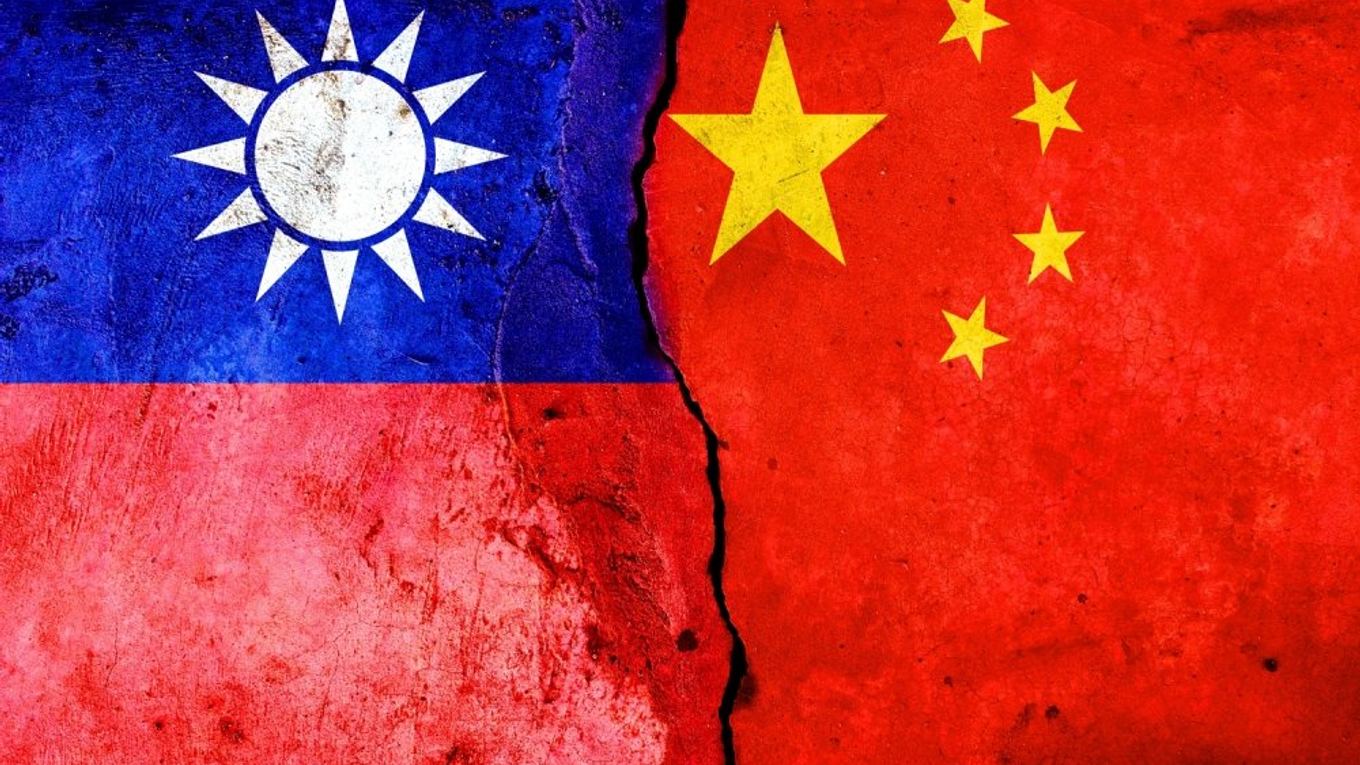
That matters well beyond town halls. The KMT went into Saturday as the dominant local party, holding 14 seats. It now heads towards the 2028 presidential race with a narrower base and a self-review its chairwoman has promised will be "the most comprehensive and thorough" in every constituency. For Beijing, which calls Lai a separatist and refuses to talk to him, the result is no endorsement of the party it prefers.
A map split between north and south
By the end of election night the KMT had 11 cities and counties, the DPP ten and an independent, Kao Hung-an, held Hsinchu City. The six largest cities split three apiece: the KMT kept Taipei, New Taipei and Taoyuan, and the DPP kept Tainan and Kaohsiung and won Taichung.
| Race | Winner | Runner-up | Note |
|---|---|---|---|
| Taipei | Chiang Wan-an (KMT), 53.7% | Puma Shen (DPP), 45.7% | KMT hold |
| New Taipei | Lee Shu-chuan (KMT) | Su Chiao-hui (DPP) | KMT hold, narrow |
| Taichung | Ho Hsin-chun (DPP) | Johnny Chiang (KMT) | DPP gain |
| Yunlin | Liu Chien-kuo (DPP), 49.21% | Chang Chia-chun (KMT), 49.16% | DPP gain by 173 votes |
| Hualien | Yu Shu-chen (KMT) | Chang Chun (independent) | Recount sought |
The DPP also took Changhua, Yilan, Chiayi City and Hsinchu County, while the KMT took Penghu from it. Two races remain open: the KMT's Chang Chia-chun plans to seek a recount in Yunlin, and Chang Chun has said he will do the same in Hualien, where he trails by a few hundred votes. A reversal in Hualien would leave the two main parties level at ten each.
Lai, who also chairs the DPP, kept his remarks domestic. "Individual candidates may win or lose, but democracy always wins," he said. The Taiwan People's Party, the smaller opposition force, won no top posts but more than 30 council seats, up from 14.
Traders called the total, not the capitals
The election markets got the headline right and the geography wrong. A week before the vote, traders gave the KMT a 77% chance of winning the most top local posts; by Saturday, 28 November, that was 97.5%, up 24 points in a day as counts came in.
Where traders misjudged was the north. A day before polling, they put the chance of the KMT holding both Taipei and New Taipei at about 30%; by Saturday evening it was settled at 100%. Campaign polls had fed that doubt, including one in early November that put Shen 17 points ahead. A KMT margin in Taipei of eight to 12 points, which traders priced at about 11% a day earlier, is now near-certain at 98.9%.
The lesson for 2028 cuts both ways. The KMT's urban core held while its central and rural support eroded, and Taichung is the city run by outgoing mayor Lu Shiow-yen, seen as a possible KMT frontrunner for the presidency.
Beijing has not yet given its verdict
China's Taiwan Affairs Office had not commented on the results by Saturday evening. Its message before the vote was plain: state media accused Shen of taking American money, and Taiwan's defence ministry reported 33 Chinese military aircraft and eight warships around the island in the 24 hours to Saturday morning.
Conflict markets barely registered the election, and what movement there was pointed down. Traders put the chance of a Chinese military clash with Taiwan before 2027 at 2.3% on 28 November, down 1.1 points in a week, on $3.6mn of trading. A blockade by the end of 2026 stands at 1.9%.
The invasion timeline barely moved: 1.4% by the end of 2026, 4.4% by mid-2027 and 8.5% by the end of 2027, with the nearer dates edging down over the week. The pricing implies that a DPP revival in the provinces gives Beijing no new reason to reach for force before Lai faces voters again. Traders put the chance of Lai leaving office before the year is out at 2.6%.
Why the KMT may be stronger than it looks
The case against reading this as a DPP revival is real. The KMT still holds more local posts, the capital and its biggest suburb, and the DPP's two narrowest gains rest on a recount and a 1.7-point lead in Taichung on a partial count. The KMT also won its referendum to reopen the door to nuclear power. If Hualien holds and Yunlin flips on a recount, the night looks much better for the opposition.
What it means for markets, business and politics
Politics The loss of Taichung takes the KMT's most prominent city out of its hands just as Lu Shiow-yen, its outgoing mayor, is talked of as a 2028 frontrunner; the self-review will test how far the party leans towards Beijing.
Geopolitics A stronger DPP heading into 2028 gives Beijing little reason to ease pressure on Lai, but conflict markets suggest more drills and propaganda, not escalation.
Markets With invasion and blockade risk priced in low single digits through 2026, the vote gives investors in Taiwanese assets no new reason to raise their cross-strait risk premium.
Business The nuclear referendum, which KMT chairwoman Cheng Li-wun tied to power demand from the AI industry, adds pressure on Lai's government to rethink an energy policy that chipmakers and data centres depend on.
What to watch
Recount requests in Yunlin and Hualien, and the Central Election Commission's confirmation of results, come first. The Taiwan Affairs Office's regular briefing will show how Beijing frames the vote. A rise in the clash-before-2027 market above 5% would signal that traders see the response going beyond words.
Beijing's state media campaigned against Shen, and he lost. Elsewhere on the map, the party it calls separatist gained.