A murder plot in Denmark, missiles in Poland, a burning ship off Finland. Europe's shadow war is getting louder
Future Times5 min read
In 30 seconds
Macron calls it a "new level" of Russian aggression, and the chance traders give a Russian strike on an EU country has more than doubled in a week. They still see open war between Russia and NATO this year as a long shot.
- Denmark has expelled Russia's defence attaché over a foiled September plot to kill a Ukrainian-American rapper
- A Russian supply ship bound for Kaliningrad burned off Finland after a drone strike Helsinki thinks was Ukrainian
- Traders put a Russian invasion of a NATO country this year below 2%, unchanged by the week's events
What it means
- MarketsIf the risk premium on Europe remains concentrated in near-term incident risk rather than war risk, European assets are…
- Stocks and sectorsSteady incident risk with no peace deal in sight supports the case for European defence spending on air defence, drones…
- BusinessCompanies in frontline states face more sabotage and espionage risk.
- Politics and policyDenmark's proposal to end tourist visas for Russians across the Schengen area, together with the EU's promised security…
What to watch
- 1 DecEstonia closes its road border on 1 December
The odds
Polymarket · live, 09:29 GMTRussia strikes an EU country by year end
up 19 points over 7dfrom 9% a week ago10% when this was published
What would move these odds
- Poland or another EU state concluding that a Russian missile or drone was aimed at its territory would push the odds up sharply
- A Russian military answer to the Gulf of Finland ship strike, near Finnish waters, would raise them
- A ceasefire in Ukraine, which traders see at 5.5% by 31 December, would pull them down
Now · 28%
Think the market's wrong? Add your forecast and see who's closer.
- NATO x Russia military clash by December 3113%up 2 points
- NATO x Russia military clash by November 302%down 1 point
- Will Russia invade a NATO country by December 31, 20262%unchanged
In late September, Danish police stopped a car carrying three men, firearms and knives on its way to a concert north of Copenhagen. On Friday Denmark said who had sent them: Russian intelligence, with help from a Danish street gang, to kill Kyivstoner, a Ukrainian-American rapper. Copenhagen is expelling Russia's defence attaché.
The plot was revealed on the same day that two Russian missiles and a suspected jet-powered drone came down in Poland. A day later, on Saturday, a Russian cargo ship bound for Kaliningrad was hit by two drones in the Gulf of Finland and drifted, burning, into Finnish waters. In a social media post on Friday, Emmanuel Macron said Europe was facing a "new level of aggression" from Moscow.
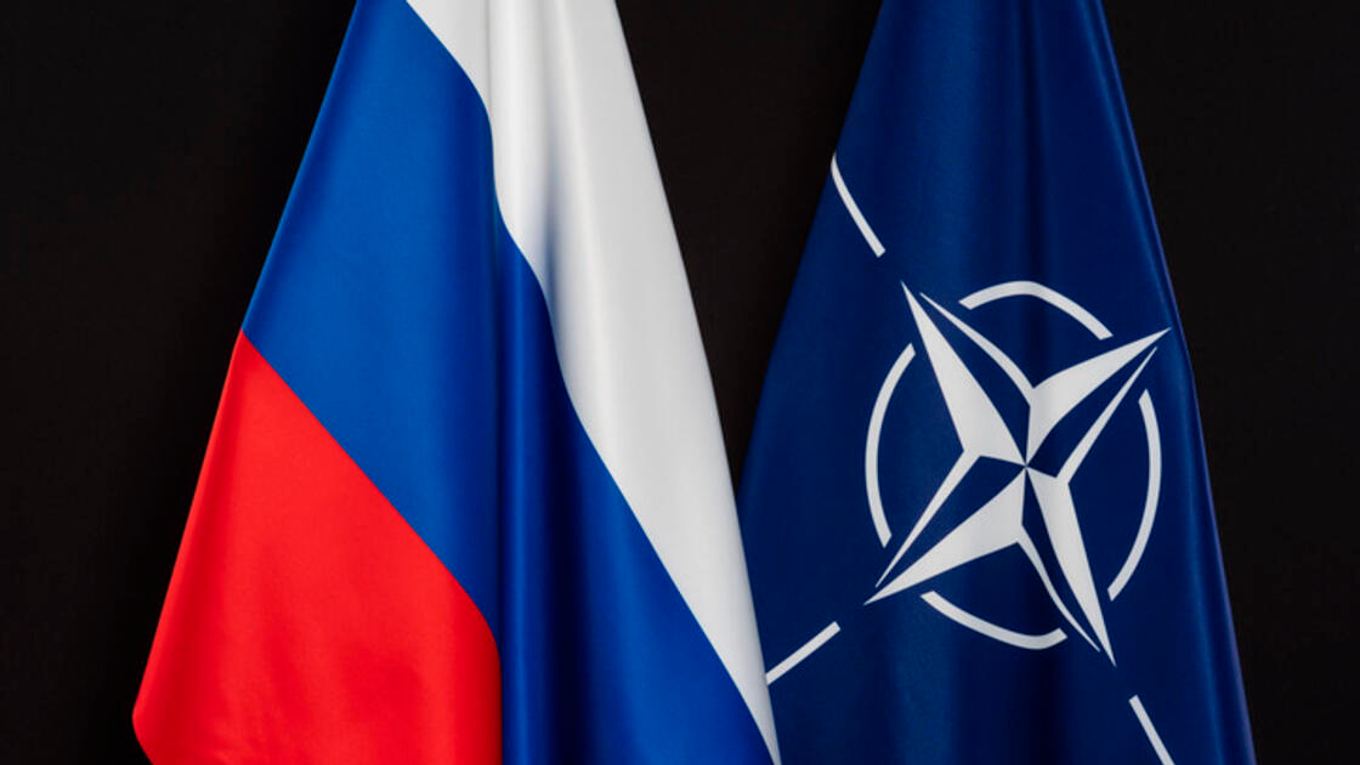
Prediction markets agree that the risk has risen, but only partly. Traders now see a 9.5% chance that Russia's armed forces carry out a missile or air strike on an EU member state by 31 December, as of 21 November, up from about 4% a week ago. The chance of Russia invading a NATO country this year has not moved, and stays below 2%. The shadow war is getting louder without turning into open war.
A week of incidents, each one deniable
Moscow rejected the Danish accusation. The Russian embassy in Copenhagen said Denmark "has not bothered to present any evidence whatsoever", and Maria Zakharova, the foreign ministry spokeswoman, promised "an appropriate response". Ursula von der Leyen called the plot "an attack on EU soil" and said it was "unacceptable".
Poland's prime minister, Donald Tusk, called the missile landings a likely "intentional provocation". One missile came down about 35km from an area where European troops were rehearsing a possible postwar mission in Ukraine. NATO called the incident a "grave violation of Polish airspace".
The Baltic strike reverses the pattern. Finnish authorities said the attack on the Sparta II, a ship they link to Russia's armed forces, was likely carried out by Ukraine. A Russian helicopter then crossed more than 4km into Finnish airspace, which Defence Minister Antti Häkkänen said may have been connected to the rescue. Prime Minister Petteri Orpo said the war was spilling into Finland's neighbourhood, and that "Ukraine has the right to fight back against the aggressor."
Why traders moved on Poland but not on invasion
Nearly 3 points of that rise came in the past day, after the Polish landings. That suggests traders are taking Tusk's word seriously. What worries them is a missile aimed at Poland, not one that strays there on its way to Ukraine.
A wider measure says much the same. Traders give an 11.5% chance of a military clash between NATO and Russian forces by the end of the year, a figure that has barely moved in seven days, on more than $4mn of trading. Over the shorter window to 30 November, the chance has roughly doubled to 4.1%, which shows that the week's events raised near-term risk without changing traders' view of the year.
The gap between these figures is the main finding. A Russian strike on EU soil or an exchange of fire with NATO forces is seen as roughly a one-in-ten chance before New Year. A Russian offensive to seize NATO territory is seen as roughly a one-in-fifty chance. Traders expect Moscow to keep raising the cost of supporting Ukraine through sabotage, intimidation and misfired munitions, while staying below the threshold that would trigger collective defence.
The diplomatic record supports that reading. At talks with US envoys in Abu Dhabi on 10 November, Russia demanded, according to leaked documents, that NATO pull its forces back from Central and Eastern Europe. Its negotiator, Alexey Drobinin, then suggested non-aggression agreements "with individual NATO member states". That is an effort to split the alliance, not to fight it head-on.
Why the market could be too calm
The strongest case against the market is that deniable attacks rarely stay deniable. A plot to kill someone on Danish soil and missiles landing near allied troops in Poland are sharper steps than the arson and sabotage Europe has grown used to. A single missile that kills Polish civilians, or a Russian naval reply in the Gulf of Finland, could make an exchange of fire hard to avoid. Peace will not provide an exit soon either: traders give a ceasefire in Ukraine by 31 December only a 5.5% chance.
Even so, every incident since 20 November can still be denied or blamed on someone else. None involved Russian forces openly firing on a NATO country, and the invasion price says traders do not expect that to change.
What it means for markets, business and security
Markets If the risk premium on Europe remains concentrated in near-term incident risk rather than war risk, European assets are likely to react to headlines without being repriced across the board. A confirmed deliberate strike would be the event that changes that.
Stocks and sectors Steady incident risk with no peace deal in sight supports the case for European defence spending on air defence, drones and border security. Shipping and insurance in the eastern Baltic face higher costs now that attacks on Russian ships have reached Finnish waters.
Business Companies in frontline states face more sabotage and espionage risk. Estonia's decision to close its road border after an attempted attack on a local drone maker shows that defence suppliers, not only infrastructure, are now targets.
Politics and policy Denmark's proposal to end tourist visas for Russians across the Schengen area, together with the EU's promised security strategy, put more of the response on Brussels. Expect pressure for EU-wide measures against Russian nationals and diplomats, not only national ones.
What to watch
On Monday, Denmark presents its Schengen proposals to EU ambassadors in Brussels. Estonia closes its road border on 1 December. Watch whether Poland's investigation concludes the missiles were aimed at its territory, and whether Russia answers the Sparta II strike near Finnish waters. A sustained move above 15% for a Russian strike on the EU would signal that traders think the shadow war is turning into an open one.
For now, the evidence points the other way. Europe is being hit harder and more often, but by a Russia that is still careful about which lines it crosses.