Iran's threats drove America's sanctions chief onto a military base. His blockade now looks set to outlast 2026.
Future Times5 min read
In 30 seconds
Scott Bessent's move, a terror indictment over a plot against a British airbase and Tehran's refusal to give up "a single particle" of enriched uranium have pushed hopes of an early end to the blockade sharply lower. Traders are pricing a stalemate, not a wider war.
- Traders cut the chance of the US ending the blockade by 31 December to 34%, down 11 points in a week
- An end by 31 March is still seen as more likely than not, at 64.5%
- Odds of a US invasion are falling too: this is a stalemate, not an escalation
What it means
- OilWith Brent near $92 a barrel in Asian trading on Wednesday, a blockade that runs into 2027 keeps a supply premium in…
- Shipping and insurersTanker owners and marine insurers should plan for Gulf war-risk conditions to persist well into next year, since a…
- Security and EuropeThe Fairford indictment and the threats to Bessent show Iran's response shifting from the battlefield to officials and…
- PoliticsTrump's claim of victory and his Treasury's insistence on maximum pressure can coexist only as long as Iran does not…
What to watch
- 30 NovThe first test is whether senior talks happen before 30 November
The odds
Polymarket · live, 03:29 GMTUS ends Iran blockade by end of 2026
down 17 points over 7dfrom 36% a week ago34% when this was published
Signals to watch
- A fall in the 31 March figure below 50% would signal that traders no longer see a settlement even in early 2027.
Now · 19%
Think the market's wrong? Add your forecast and see who's closer.
- US announces end of Iranian blockade by November 307%down 10 points
- US announces end of Iranian blockade by March 3154%down 14 points
- Next US-Iran senior diplomatic meeting by November 30, 20268%down 20 points
The man running America's economic war on Iran is now living on a military base. Scott Bessent, the Treasury secretary, has left his home in Georgetown after a series of Iranian threats against his life, a move first reported by The New York Times. A person familiar with the matter said a newspaper photograph had made the house identifiable, and that "security concerns began to increase which have now forced the secretary to relocate to a military base for his safety."
Treasury's response was a statement of intent rather than retreat. Bessent "will not be deterred by the Iranian regime's threats", a spokesperson said, adding that he remains committed to Operation Economic Outcast and to maintaining the naval blockade, which together are "collapsing Iran's economy".
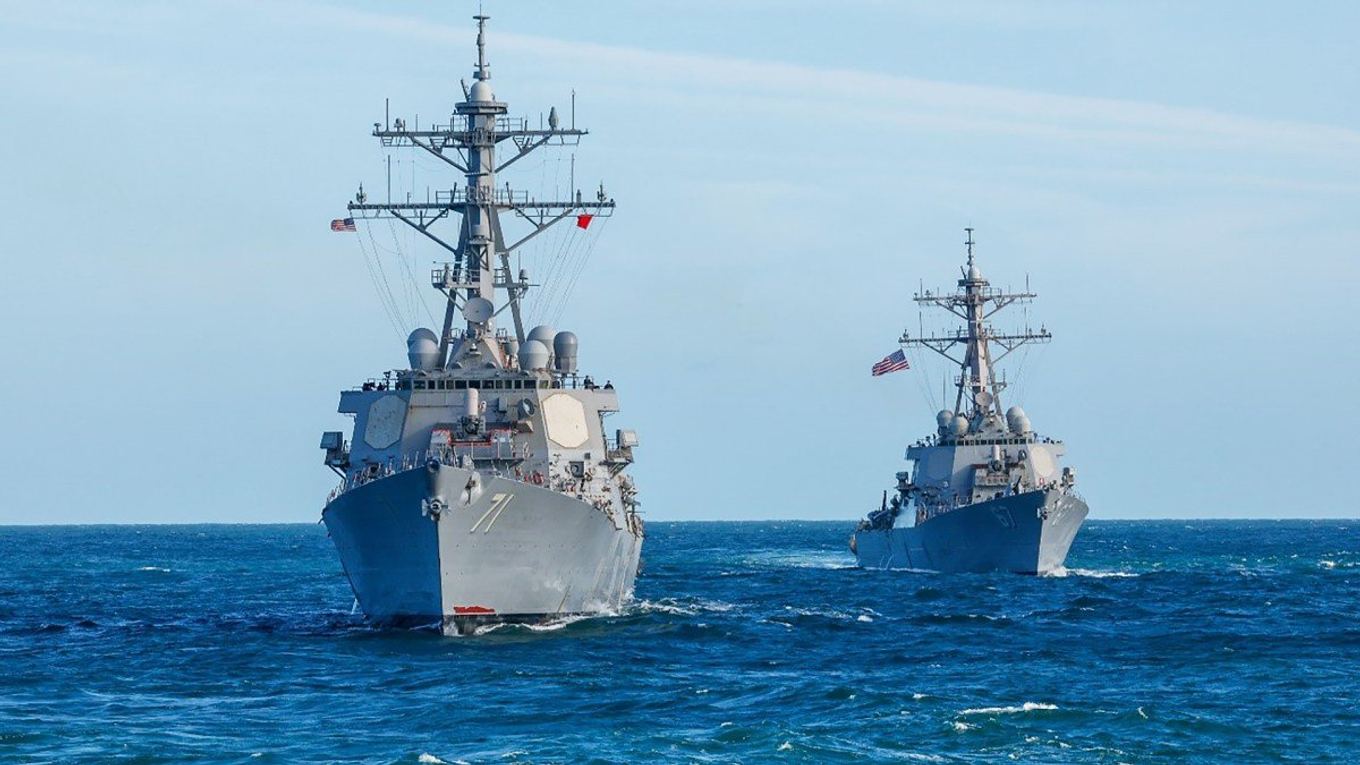
Even as Donald Trump declares the war as good as won, the two instruments that define it, sanctions and the blockade, are being defended more loudly than ever, and Tehran is answering with threats rather than concessions. Traders have drawn the obvious conclusion: an early end to the blockade is fading, and so is the risk of a wider war.
Why the Treasury became a target
Bessent is no bystander. Treasury launched Operation Economic Outcast in August to isolate Iran through sanctions and other financial measures alongside the military campaign, and he leads it. He has promised an "economic onslaught" against Tehran. The naval blockade of Iranian ports is the physical arm of the same strategy.
The threat picture has been building for weeks. Jay Clayton, the director of national intelligence, warned Marco Rubio last month in an unclassified memo that Iran had "substantially increased" efforts to target Americans in the Middle East and beyond. The New York Times reported that plotting against current and former US officials had reached a "more advanced stage". The specific threats against Bessent have not been made public.
Late on Tuesday 10 November the Justice Department unsealed an eight-count indictment against three men on charges tied to Iran's Revolutionary Guards and Kataib Hezbollah. Prosecutors allege they were behind nearly 20 attacks and attempted attacks in Europe and the US, including a plot in which three vans, some carrying barrels of fuel, were driven towards RAF Fairford, a Gloucestershire base hosting US aircraft, on 26 September. The US has since moved aircraft out of two British bases after reported Iranian threats.
Tehran's answer: not a particle
On the nuclear file, Iran has hardened its line. Mohsen Rezaei, secretary of the Supreme National Security Council, told state broadcaster IRIB that Tehran "will not remove even a single particle of enriched nuclear material from the country". Washington wants a final deal in which Iran gives up its highly enriched uranium stockpile; Iran says talks can begin only once fighting stops on every front, including Lebanon, and its officials deny that negotiations are under way at all.
Trump, speaking at a Veterans Day event, said he wants "a total victory, not a 93% victory". Rubio said on Tuesday he saw no need to resume major combat because sanctions are working. Both statements point the same way: the pressure stays on until Iran moves.
What traders now expect
Polymarket traders put the chance that the US announces an end to the blockade by 31 December at 34% (as of 11 November), down 5 points in a day and 11 in a week, on more than $6mn of trading. The odds of an announcement by 30 November have collapsed to 12%, from 24% a week ago.
The longer horizon tells the real story. Traders still give 64.5% to an end by 31 March, only 6 points lower than a week ago. The market has not abandoned a settlement; it has pushed it into the new year, with its central expectation now sitting in the first quarter of 2027.
Diplomacy has slipped on the same timetable. The chance of the next senior US-Iran diplomatic meeting by 30 November has fallen to 14.5%, down 6 points in a day; by 31 December it is 37.5%. Without talks there is no deal: a final nuclear agreement by year end is priced at 12.5%, and Iran agreeing to surrender its enriched uranium by then at just 3.5%, a figure Rezaei's words do little to lift.
What traders are not doing is pricing a bigger war. The chance of a US invasion of Iran before 2027 has fallen to 7.5%, down 4 points in a week. Strait of Hormuz traffic returning to normal by 31 December is priced at 8.5%. Read together, these numbers describe a frozen conflict: no escalation, no exit, and a blockade that outlasts the rhetoric of victory.
Why the market could be wrong
The strongest case for an earlier end is Trump himself. On 9 November he posted of "positive momentum toward an end to this Conflict", and on 10 November, asked why he would not declare the war over, he pointed to the need for a "long-term solution". A president who wants a win can announce one quickly, and the interim deal reached in June shows both sides can surprise. But a relocation of the official who runs the blockade is not the behaviour of an administration about to lift it.
What it means for markets, business and politics
Oil With Brent near $92 a barrel in Asian trading on Wednesday, a blockade that runs into 2027 keeps a supply premium in crude through the winter; the falling invasion odds cap the risk of a spike rather than remove the premium.
Shipping and insurers Tanker owners and marine insurers should plan for Gulf war-risk conditions to persist well into next year, since a return to normal Hormuz traffic by year end is seen as a long shot.
Security and Europe The Fairford indictment and the threats to Bessent show Iran's response shifting from the battlefield to officials and bases in the West, raising security costs for allied governments that host US forces.
Politics Trump's claim of victory and his Treasury's insistence on maximum pressure can coexist only as long as Iran does not bend; a declared end of the war without an end to the blockade is now the likeliest outcome for 2026.
What to watch
The first test is whether senior talks happen before 30 November; confirmed talks would revive hopes of a year-end announcement quickly. A fall in the 31 March figure below 50% would signal that traders no longer see a settlement even in early 2027.
For now, the official in charge of squeezing Iran is under military guard, and the squeeze is not letting up.