Talks with Iran are all but dead. Trump says he will "see what happens after January 1
Future Times5 min read
In 30 seconds
Israel is pressing for a short bombing campaign and the Senate has again declined to stop the war. Traders have given up on diplomacy this year, yet still think a new bombing campaign before January is less likely than not.
- The Senate rejected the latest Iran war powers resolution 48-51, with no new Republican defectors after the midterms
- Traders now give an end to the US blockade of Iranian ports by 31 March 41.5%, down from 59.5% a week ago
- Brent fell about 15% in a month to roughly $92 despite the strike talk, and traders see WTI dipping below $80 in November
What it means
- MarketsWith traders expecting the blockade to persist but no wider war, oil is trading on supply surpluses more than on Iran…
- Stocks and sectorsOil majors such as ExxonMobil and Chevron have lost some of their war premium as crude slid, while missile-defence…
- BusinessShippers and insurers face a blockade that traders now expect to run into 2027, so Gulf routing costs and war-risk…
- PoliticsThursday's vote shows the midterm defeat has not moved Senate Republicans.
What to watch
- 30 NovThe 30 November dates on the ceasefire and pause contracts are the first test of the December lull
- 1 Jan1 January is the date Trump chose himself
The odds
Polymarket · live, 12:08 GMTUS and Iran hold a senior-level meeting by 31 December
down 3 points over 7dfrom 17% a week ago
What would move these odds
- Any announced envoy contact through Oman, Qatar or Pakistan would lift the meeting odds sharply
- A US or Israeli strike on Iranian soil in December would push them towards zero
- New intelligence backing the chemical or biological weapons claims would strengthen the case for strikes
Now · 14%
Think the market's wrong? Add your forecast and see who's closer.
- Next US-Iran senior diplomatic meeting by November 30, 20261%down 2 points
- Where will the next US-Iran senior diplomatic meeting take place: No Meeting by December 3186%up 3 points
- US announces end of Iranian blockade by December 3113%down 1 point
"There is indication that Iran is looking at gas and they're looking at the bio… the biological weapons," Donald Trump told Fox News on Thursday. He offered no evidence, and he set no date for acting on it. "We'll see what happens after January 1," he said.
That line matters more than the warning that came before it. Israel is lobbying for a fresh bombing campaign, Trump has pulled his vice-president off the Iran file and the Senate has again declined to tie his hands. Diplomacy has rarely looked deader. Yet traders still lean towards no new bombing campaign in December, with the real decision pushed into the new year.
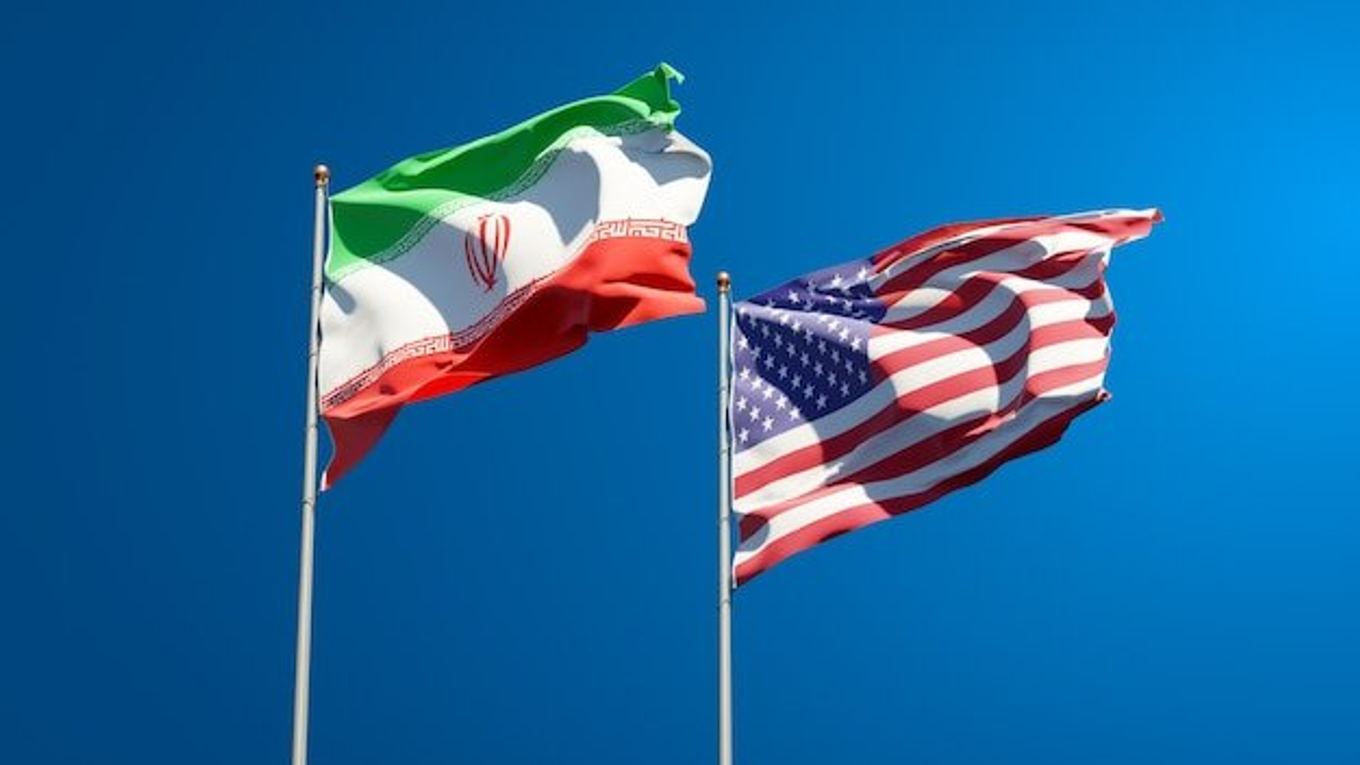
The case for bombing arrives in Washington
Roman Gofman, the Mossad director and a close ally of Benjamin Netanyahu, travelled to Washington and Miami earlier this month, meeting CIA director John Ratcliffe and the envoy Steve Witkoff. Axios reported that he presented intelligence on Iranian chemical-weapons work, and that some in the administration see it as "driven by an agenda". The Telegraph reported on Thursday that Trump is weighing a joint campaign with Israel lasting four to seven days, the option Netanyahu is pressing for.
Tehran rejects the claims. Foreign Minister Abbas Araghchi called talk of a planned attack on Washington "Iraq War-style propaganda", and Secretary of State Marco Rubio said on Wednesday that the US faces no "imminent threat".
The diplomatic track had already narrowed. On 12 November Trump wrote that "we don't need a deal with Iran. Those days have long since passed", and told JD Vance, who had led the negotiations, to turn his attention to crime in Democratic-run cities. Indirect contacts through mediators were not formally ended, but the blockade of Iranian ports and the sanctions stay in place.
Congress declines to step in
On Thursday the Senate rejected, by 48 votes to 51, a House-passed resolution directing the president "to remove United States Armed Forces from hostilities with Iran". It was the first congressional vote on the war since Republicans' heavy losses in the 3 November midterms. Only three Republicans, Susan Collins, Lisa Murkowski and Rand Paul, voted in favour; the Democrat John Fetterman voted against.
Thom Tillis, who backed an earlier effort, switched to no. "This one doesn't go to the president, so it's just a statement from Congress," he said. The vote leaves Trump free to choose his moment.
Traders have written off a deal this year
Traders put the chance of a senior US-Iran diplomatic meeting by 31 December at 14% (as of 20 November), down 8.5 points in a day and from 31.5% on 13 November. A meeting by 30 November is priced at 3.1%.
The blockade looks set to outlast the year. Traders give the US announcing its end by 31 December 11.5%, down from 26.7% on 13 November, and by 31 March 41.5%, down from 59.5%. The later date fell eight points in a day: traders are not just pushing relief back, they doubt it comes in the first quarter at all.
Why the guns may stay quiet until January
None of this has translated into expectations of a wider war. Traders put the chance that the Israel-Iran ceasefire survives through 30 November at 83.5%, through 15 December at 72.5% and through 31 December at 66.5%. The chance of a US invasion of Iran before 2027 is 6.5%, barely changed since 13 November.
A second set of contracts asks whether the US will go 14 straight days without striking Iranian soil, the first quiet day falling by a given date. Traders give such a pause starting by 30 November 45.5%, down from 62% on 13 November after the strikes on Qeshm Island, but by 31 December 72.5%. Read together, these numbers describe a December lull without diplomacy: no talks, no deal and no blockade relief, and more likely than not no campaign before Trump's own January marker. Even so, the ceasefire odds fall 17 points between 30 November and 31 December: traders see a real chance of fighting in December, just not a likely one.
Oil agrees. Brent traded at $92.72 a barrel on Thursday, up 0.8%, after Iran's navy said two tankers had hit mines in the Strait of Hormuz, a claim not independently verified. It is still about 15% lower than a month ago and heading for a third weekly fall. Traders give WTI a 60.5% chance of trading below $80 before November ends, up 22.5 points since 13 November.
How the market could be wrong
The strongest counter-case is that the plans are ready. An Israeli officer has said US Central Command and the Israeli military have approved joint plans and await Trump's word, and two US carriers remain in the region. A short campaign would break both the Israel ceasefire and the US pause well before January, and a credible chemical-weapons finding could supply the trigger. Trump has stepped back from strikes before, which is why traders lean towards restraint. But they still give one chance in three to Israel and Iran trading blows before the year is out.
What it means for markets, business and geopolitics
Markets With traders expecting the blockade to persist but no wider war, oil is trading on supply surpluses more than on Iran headlines. A strike would reprice that quickly: the risk sits in the tail, not in the current price.
Stocks and sectors Oil majors such as ExxonMobil and Chevron have lost some of their war premium as crude slid, while missile-defence suppliers such as RTX and Lockheed Martin remain exposed to demand for Patriot batteries and interceptors if Israel and the Gulf states are struck again.
XOMCVXRTXLMTBusiness Shippers and insurers face a blockade that traders now expect to run into 2027, so Gulf routing costs and war-risk premiums are unlikely to ease this winter.
Politics Thursday's vote shows the midterm defeat has not moved Senate Republicans. Pressure on the war will now come through spending fights, not war powers resolutions.
What to watch
The 30 November dates on the ceasefire and pause contracts are the first test of the December lull. Any announced envoy contact through regional mediators would revive the meeting odds; a strike on Iranian soil would end them. And 1 January is the date Trump chose himself.
Iran has lost its negotiating partner in Washington. What it may have gained is six weeks.