Washington has floated NATO membership for Ukraine in return for Donbas. Moscow's red line has not moved
Future Times5 min read
In 30 seconds
Zelensky says US negotiators asked whether Kyiv would leave Donbas if it joined NATO. Traders see little chance of either happening this year, and a ceasefire only looks more likely than not by mid-2027.
- Zelensky says he would put any confirmed package to Ukrainians first, which pushes a land-for-NATO deal well beyond the end of 2026
- The Kremlin still demands an end to NATO expansion, so the offer collides with Russia's oldest red line
- The White House has kept Ukraine off the agenda for Thursday's Trump-Putin-Xi meeting in Shenzhen
What it means
- MarketsWith a 2026 ceasefire priced as a long shot, the risk premium on Black Sea shipping and European gas is unlikely to…
- Stocks and sectorsEuropean defence contractors' order books are built on a long war and rearmament.
- BusinessReconstruction is a 2027 story.
- GeopoliticsWashington is running two tracks that pull against each other.
What to watch
- 19 NovThe Shenzhen meeting on 19 November, and whether Putin raises Ukraine regardless
The odds
Polymarket · live, 08:32 GMTRussia and Ukraine agree a ceasefire by 31 March 2027
up 1 point over 7dfrom 22% a week ago
What would move these odds
- Public US confirmation of the NATO-for-Donbas idea, backed by other NATO allies, would push 2027 ceasefire odds up
- A Kremlin rejection or a fresh Russian push on Kostiantynivka would pull them down
- Any Trump-Putin talk on Ukraine at Shenzhen on 19 November, despite the White House line, would move them
Now · 23%
Think the market's wrong? Add your forecast and see who's closer.
- Russia x Ukraine Ceasefire by December 317%down 3 points
- Russia x Ukraine ceasefire agreement by June 30, 202753%unchanged
- Ukraine joins NATO before 20271%unchanged
"The Americans raised a question: 'What if Ukraine joins Nato? Would Ukraine withdraw from Donbas?'" Volodymyr Zelensky told reporters, in remarks released by his office. It was, he said, the first time in the talks that membership of the alliance had been linked to the land Russia wants.
The idea would trade the slice of Donetsk and Luhansk that Ukraine still holds for the prize Moscow has always refused to concede. US officials had previously said NATO membership for Ukraine was off the table. Washington has not confirmed the offer publicly, and Zelensky himself cautioned: "we need specifics, and we don't have them yet."
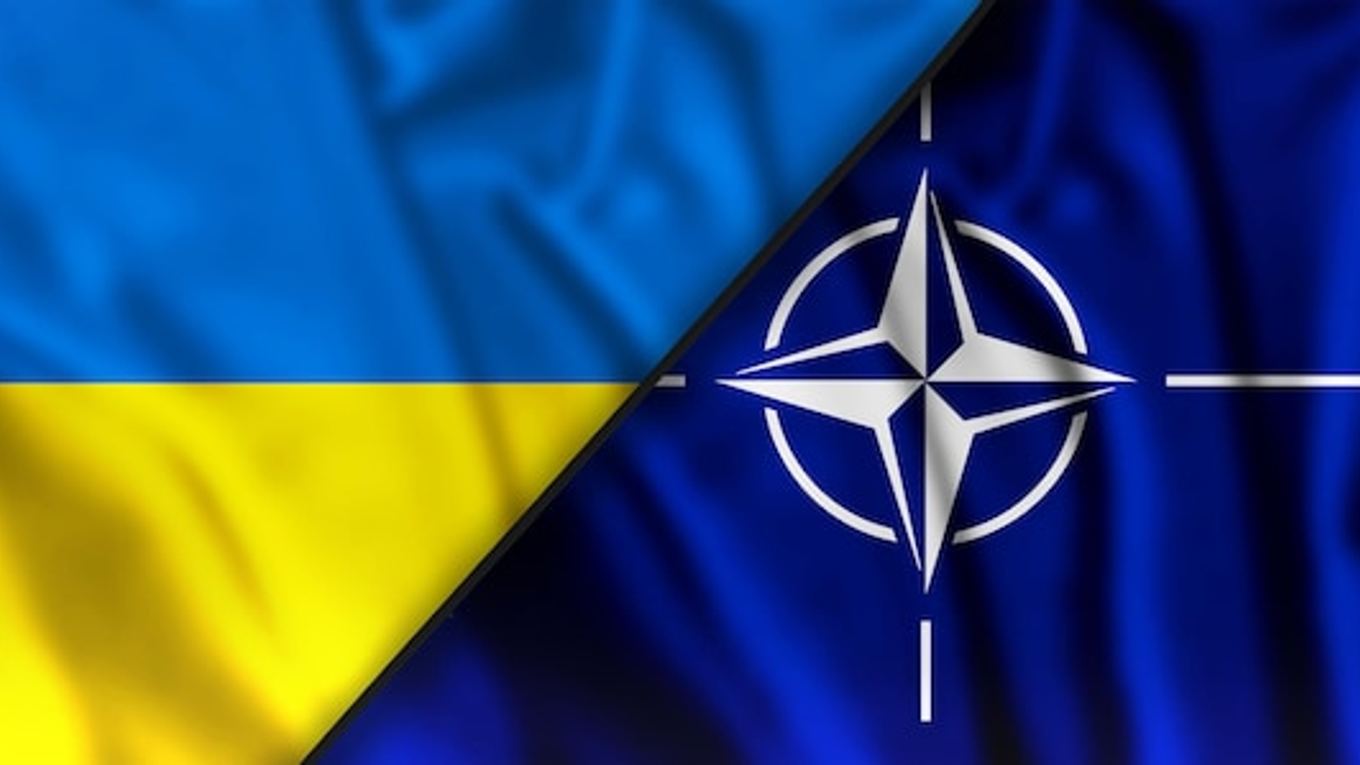
Traders are not treating it as a breakthrough. As of 14 November they put the chance of a Russia-Ukraine ceasefire by 31 December at 7.2%, down 3 points in a week, and by 31 March 2027 at 22.5%. If the offer is real, the market reads it as a bargain for 2027 at the earliest.
A question, not yet a proposal
The question followed US-mediated talks in Abu Dhabi on 10 and 11 November, after which Steve Witkoff and Jared Kushner saw Vladimir Putin in Moscow and then met Zelensky in Ireland on 12 November.
Zelensky did not say yes. Kyiv still refuses to give up sovereign territory, and he said any deal would come "without any recognition of the occupied territories as Russian". But he opened a door he had kept shut. If the US "confirms this to us together with other NATO colleagues", he said, he would ask Ukrainians whether they accept the package: "I have no right to make that decision on my own."
His price is high: guarantees modelled on NATO's Article 5 "as an absolute minimum", a strong army backed by weapons and financial support, and a recovery plan with clearly identified funding. He said Washington talks of something similar, but bilateral, like its commitments to Israel, and that when he asked about US troops in Ukraine, the answer was "No".
The red line Moscow has not moved
The difficulty is in Moscow. After Putin's meeting with the US envoys on 12 November, his aide Yuri Ushakov said Moscow wanted to add "some fresh considerations" to its demands. Those demands remain the ultimatums Russia issued in 2021: an end to NATO expansion, no alliance weapons near Russia's borders and NATO returned to its 1997 shape. Russia has also long sought limits on Ukraine's army and guaranteed neutrality. Zelensky's own verdict: "You have also heard Putin's signals, and this is an extremely difficult conversation."
Zelensky dismissed Putin's latest offer, a local humanitarian truce in the contested Donetsk city of Kostiantynivka, as a ploy to take it. Of the energy truce the US envoys raised in Moscow, he said: "Putin personally does not support a ceasefire."
Zelensky says the sides have agreed a prisoner exchange of more than 1,000 people, and the White House says its envoys have started work on the largest exchange of the war.
Why traders give it almost no chance this year
Each half of the reported deal looks remote in 2026. Traders put the chance of Ukraine joining NATO before 2027 at 1.2%, on about $1.3mn of trading, and of Ukraine agreeing to give up the rest of Donbas by 31 December at 3.3%. The mirror-image Russian demand, Ukraine agreeing not to join NATO this year, stands at 4.4%, down 1 point in a week.
Those prices hang together. A NATO-for-Donbas swap needs Kyiv's consent, Moscow's acquiescence, unanimous approval from the alliance's members and, on Zelensky's terms, the consent of Ukrainians. None of that fits into seven weeks.
The timeline only turns later. A ceasefire agreement by 30 June 2027 trades at 53%, so traders see the war more likely than not to be paused by mid-2027, but they have not moved that number on Zelensky's remarks: it is up just 1 point in a week.
The Shenzhen gap
The timing is awkward. On 13 November the White House said Donald Trump, Putin and Xi Jinping would meet in Shenzhen on Thursday, 19 November, on the sidelines of the APEC summit, to discuss nuclear arms and the war in Iran. Ukraine would not be raised. "China is not really a part of that track, so it doesn't seem appropriate to have the Ukraine discussion there," a senior US official said.
Ushakov said the opposite: "discussion of the entire range of issues related to the settlement will continue". Zelensky has warned the summit could become a Yalta-style "redistribution of spheres of influence". Washington is offering Kyiv a bigger prize in one channel while keeping Ukraine out of the room where the three leaders meet.
Why the market could be wrong
The strongest case for a deal is that the US has, for the first time, put NATO back on the table, which shifts the incentives for Kyiv. A Ukrainian public that sees membership as the only lasting guarantee could accept the loss of land already mostly occupied. If Washington and enough allies confirm the offer in writing, the 2027 ceasefire numbers would be too low. That still requires Putin to accept the alliance he went to war to keep out, and nothing his aides have said since 12 November suggests he will.
What it means for markets, business and diplomacy
Markets With a 2026 ceasefire priced as a long shot, the risk premium on Black Sea shipping and European gas is unlikely to ease before the new year; any rally on peace headlines rests on 2027 expectations.
Stocks and sectors European defence contractors' order books are built on a long war and rearmament. A NATO-for-land deal would extend the alliance's eastern frontier, so even a peace deal on these terms points to more defence spending, not less.
Business Reconstruction is a 2027 story. Zelensky ties any deal to rebuilding money, so firms positioning for contracts face a referendum and alliance ratification before the funds move.
Geopolitics Washington is running two tracks that pull against each other. Keeping Ukraine off the Shenzhen agenda while floating membership leaves Europe and Kyiv to test which one the White House means.
What to watch
The Shenzhen meeting on 19 November, and whether Putin raises Ukraine regardless; any White House or allied statement confirming the membership idea; and the Kremlin's first public response.
Until Moscow answers, the offer is a question about a war Russia shows no sign of wanting to end on these terms.